STEM & Learning
Kitchen-table science: 5 experiments with stuff you already own
No lab coat, no special kit — five genuinely wow-worthy experiments you can run tonight with things already in your kitchen cupboard.

IdeaKidz — toys that grow curious minds. Trusted by parents, loved by kids.
Loading this article…
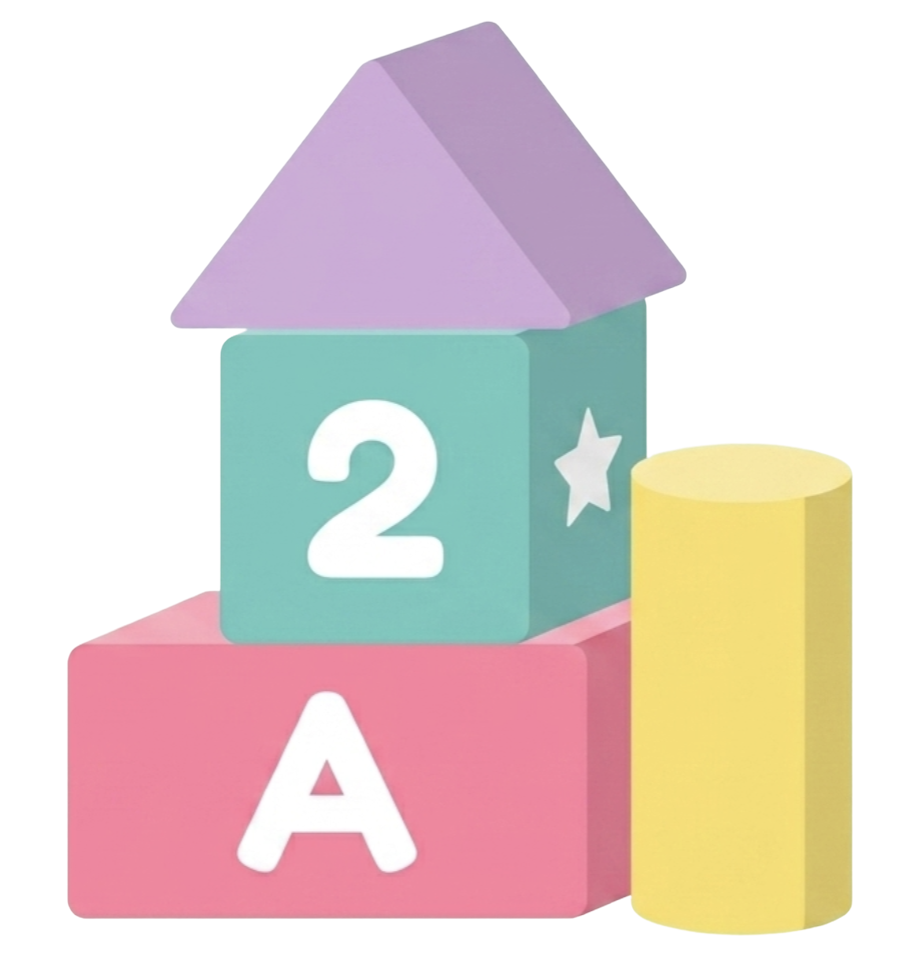
Watch a three-year-old build a tower and you are watching a structural engineer at the very beginning of her career. She places a block, studies the wobble, adjusts, places another. Nobody taught her about centres of gravity — the tower is teaching her, one collapse at a time, in the only language a three-year-old fully trusts: her own hands.
This is why blocks have outlived every educational fad of the last hundred years. They deliver instant, honest feedback. An app can be sweet-talked; gravity cannot. The tower either stands or it doesn't, and the child alone decides what to try next. That loop — build, fail, adjust, rebuild — is the engineering method in its purest form, running years before anyone writes an equation.
Decades of studies link early block play to later spatial reasoning — the ability to rotate and manipulate shapes in the mind, which predicts success in maths, science and design more strongly than almost any other early skill. Children who build a lot tend to talk differently too: block play reliably pulls out spatial words like 'under', 'beside', 'taller' and 'balance' at rates ordinary play doesn't.
The social layer matters just as much. Two children sharing one tub of blocks are negotiating, dividing labour and defending design decisions — 'that side is your side, but the bridge is both of ours' is project management, age four.
Gravity is the most patient teacher your child will ever have — it never scolds, never sighs, and never gets tired of repeating the lesson.
The beauty of blocks is that the same tub keeps pace with a growing brain. Toddlers stack and knock down — that's the whole game, and it's enough. Around three and four, structures gain names and stories: this is a house, that is the gate. By six, children set themselves briefs — a bridge the toy lorry can actually cross — and this is where real problem-solving begins, because a brief can fail.
Your job is quieter than it looks. Ask for the story ('who lives in this one?'), request impossible commissions ('can you build me something taller than the stool that won't fall when I clap?'), and resist the urge to fix the wobbly bit. A tower rescued by an adult teaches nothing; a tower that collapses teaches everything.
You don't need seventeen sets. One generous tub of well-made blocks — wooden or plastic, mixed shapes, enough pieces that ambition isn't rationed — outworks a shelf of single-purpose toys. If it's still being dragged out at age eight for elaborate city-building weekends, it will have cost you less per hour of play than nearly anything else in the house.
No lab coat, no special kit — five genuinely wow-worthy experiments you can run tonight with things already in your kitchen cupboard.
The right first robotics kit turns screen time into maker time. Here's how to pick one that gets built, not abandoned by February.
Party in two days, budget in mind, child you barely know? A mum of four shares the simple matrix that has never once failed her.